
A Japanese-English dictionary
that works offline
Search and read Japanese — on your device, no network needed.
Ordinary Japanese Dictionary is built for everyday reading and study. Detailed entries with example sentences, proper names, kanji breakdowns, furigana and pitch accent — and all of it works offline.
Features
Everything works without the internet: the dictionary, morphological analysis and audio all live inside the app.
Offline
Search and reading need no network. Nothing loads on the fly.
Rich dictionary
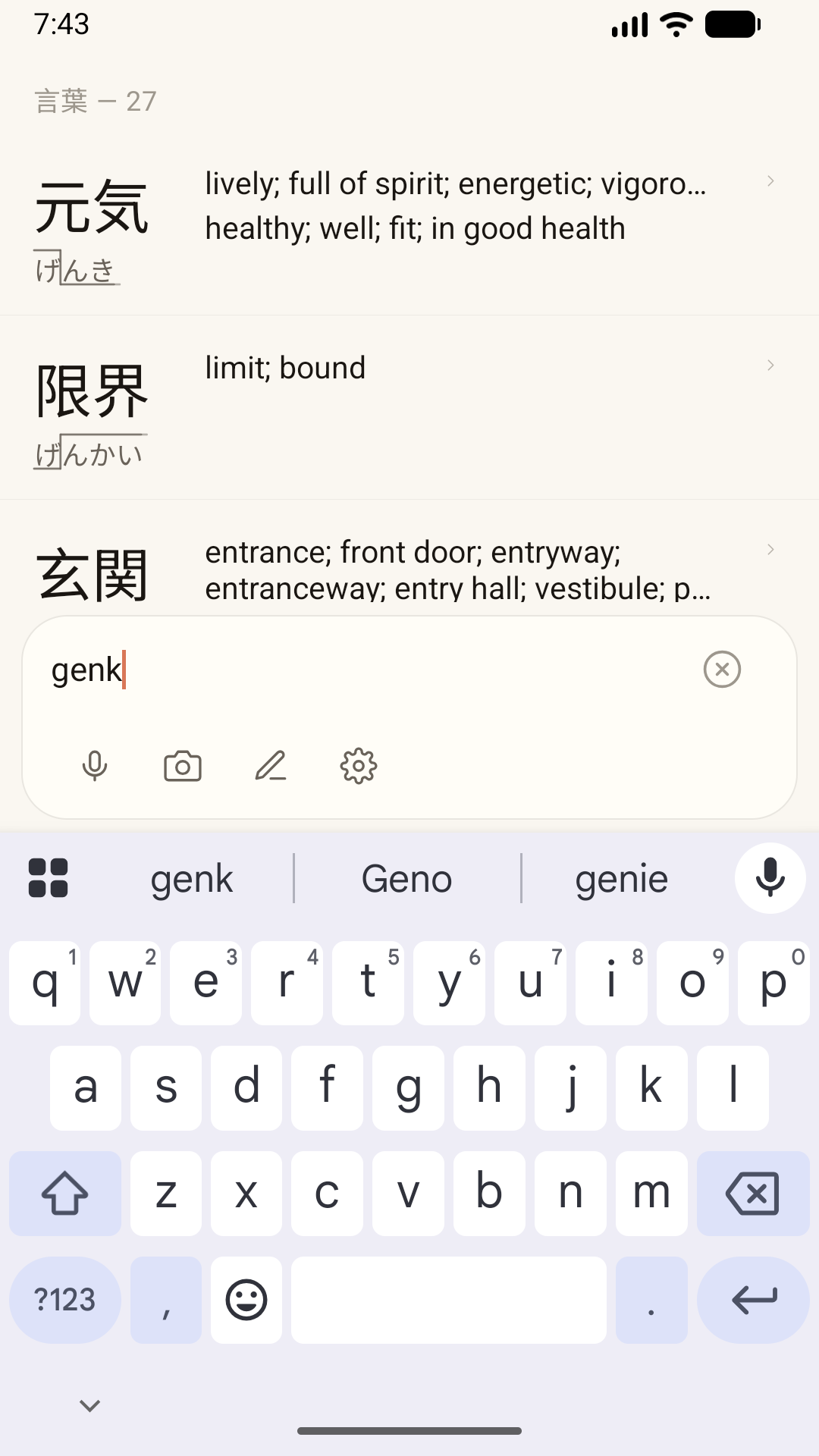
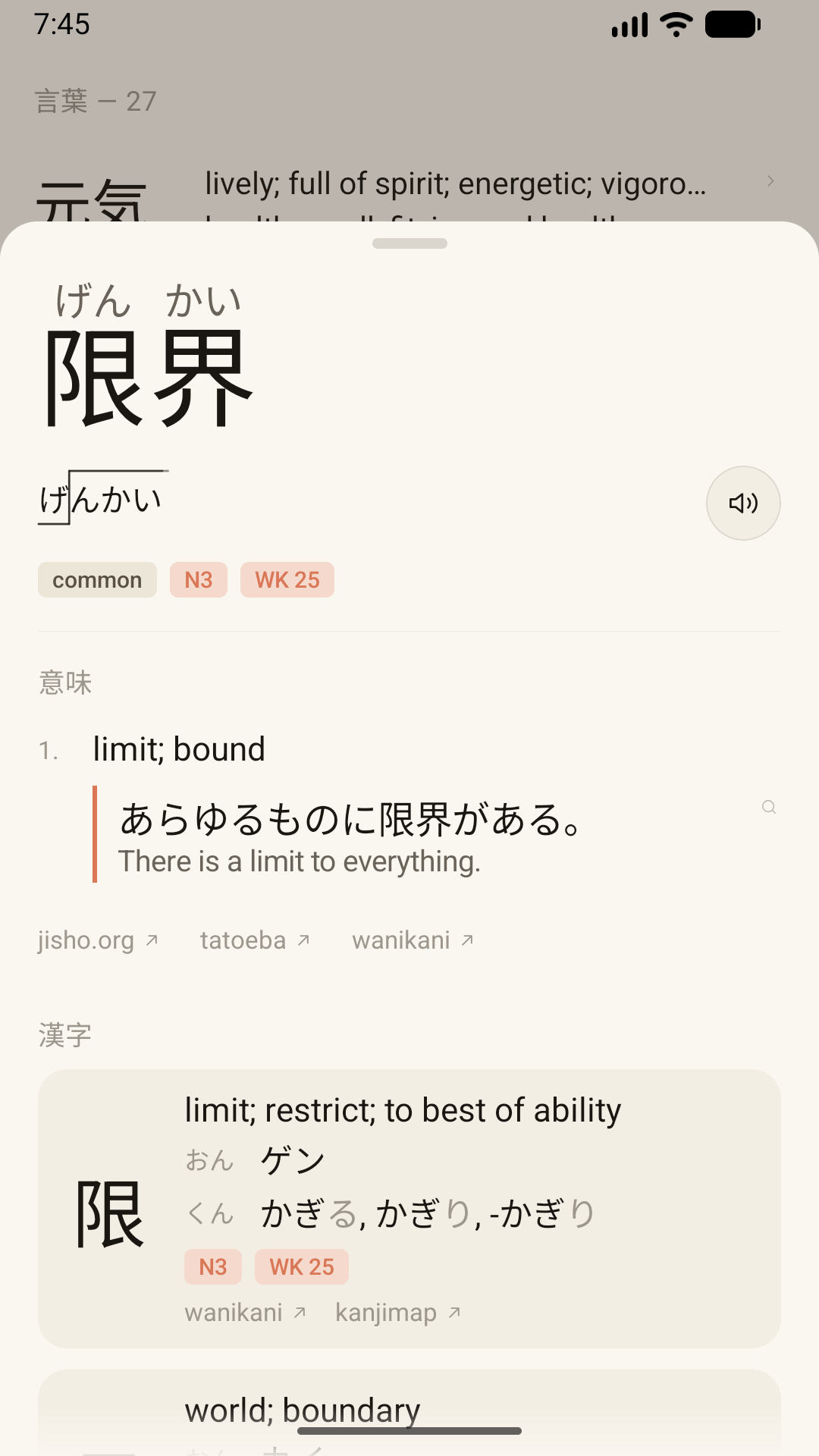
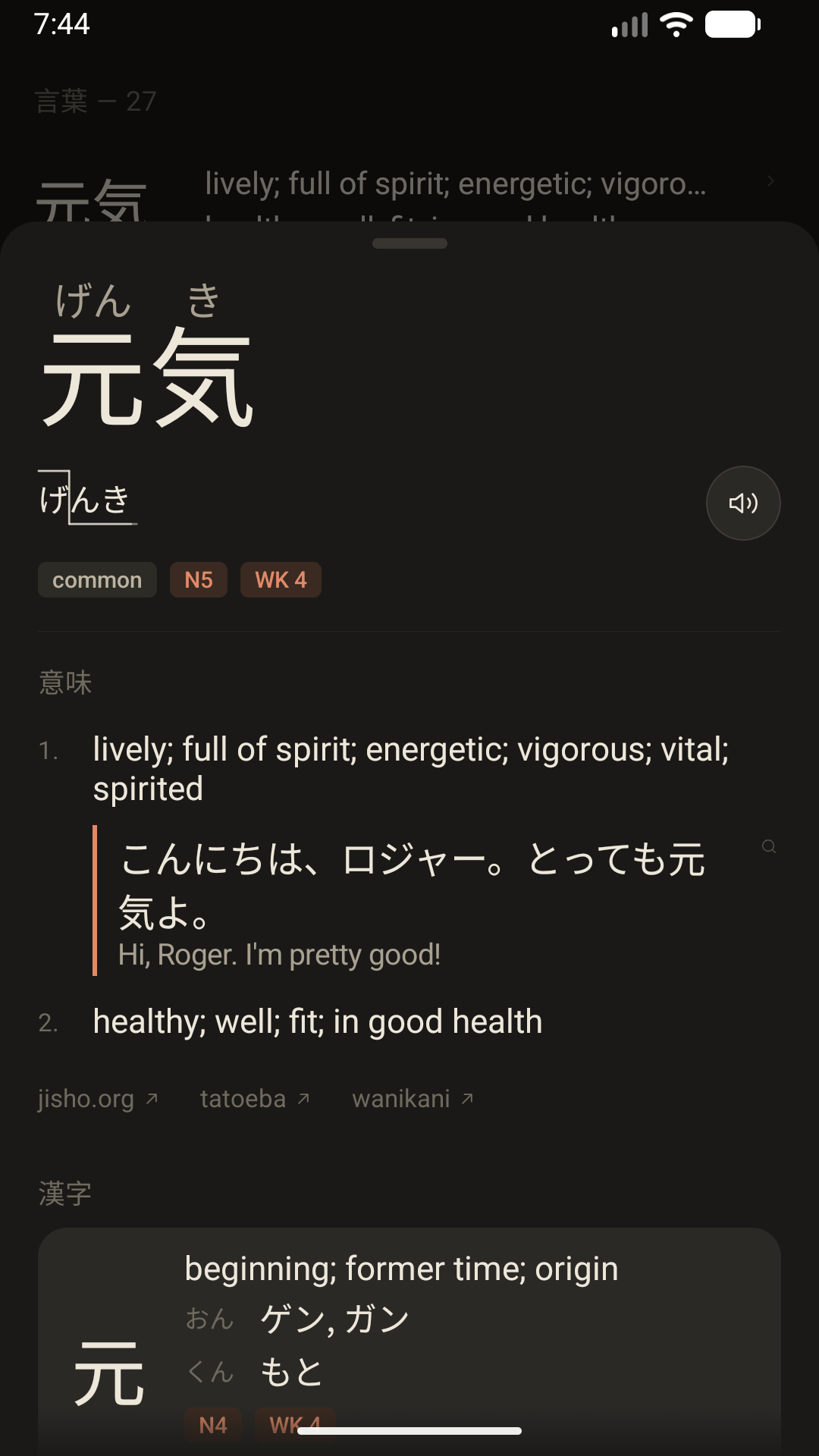
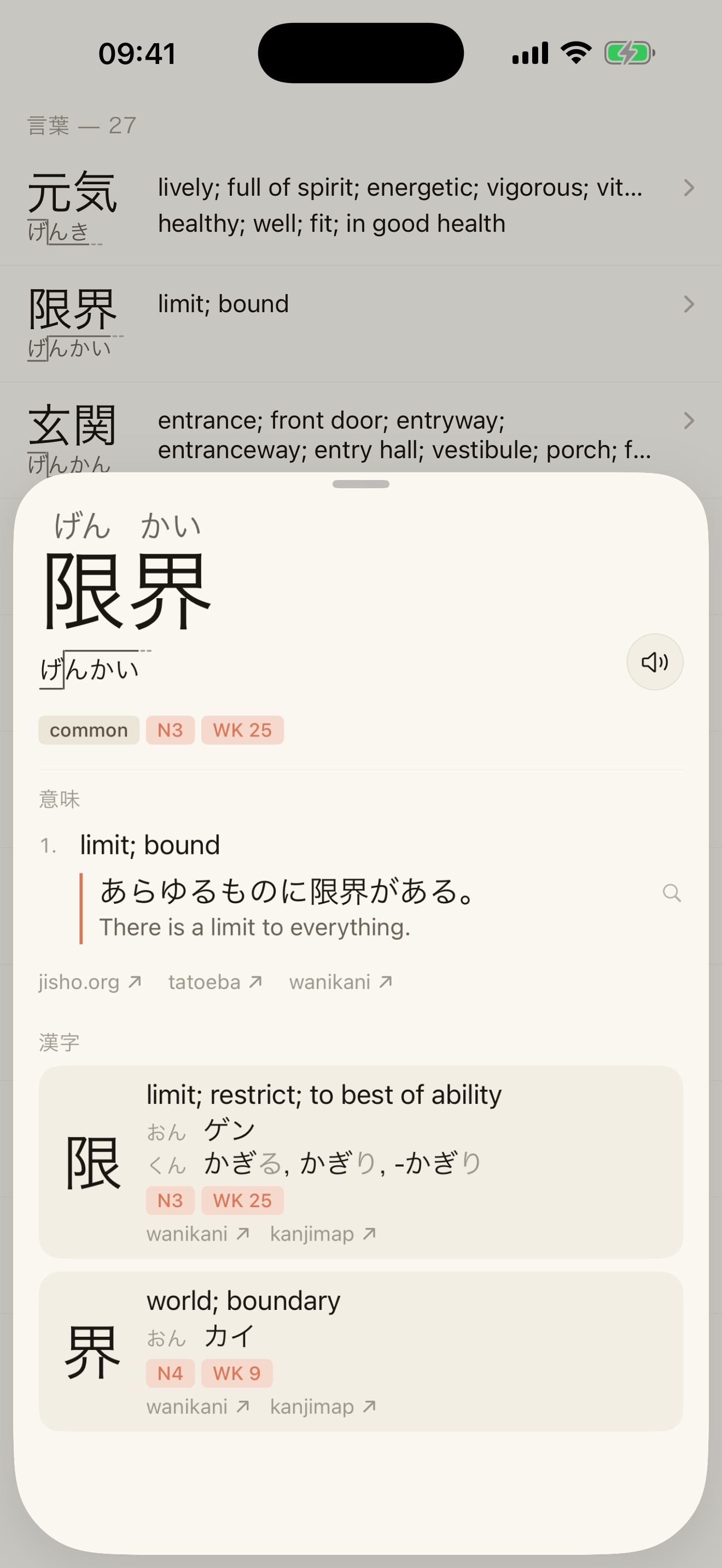
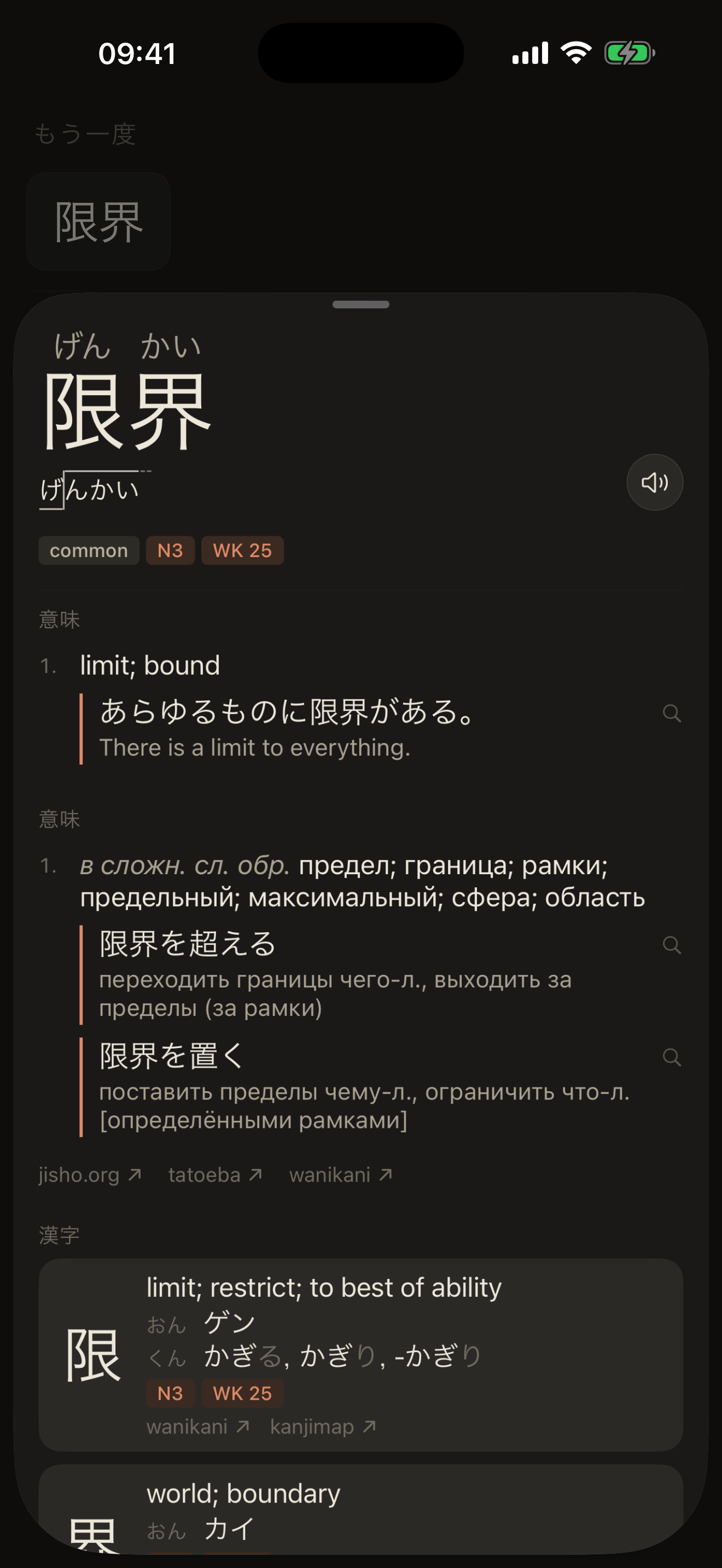
Full English meanings with examples, tags and cross-references.
Example sentences
Real Japanese examples from Tatoeba, linked to each sense.
Reading mode
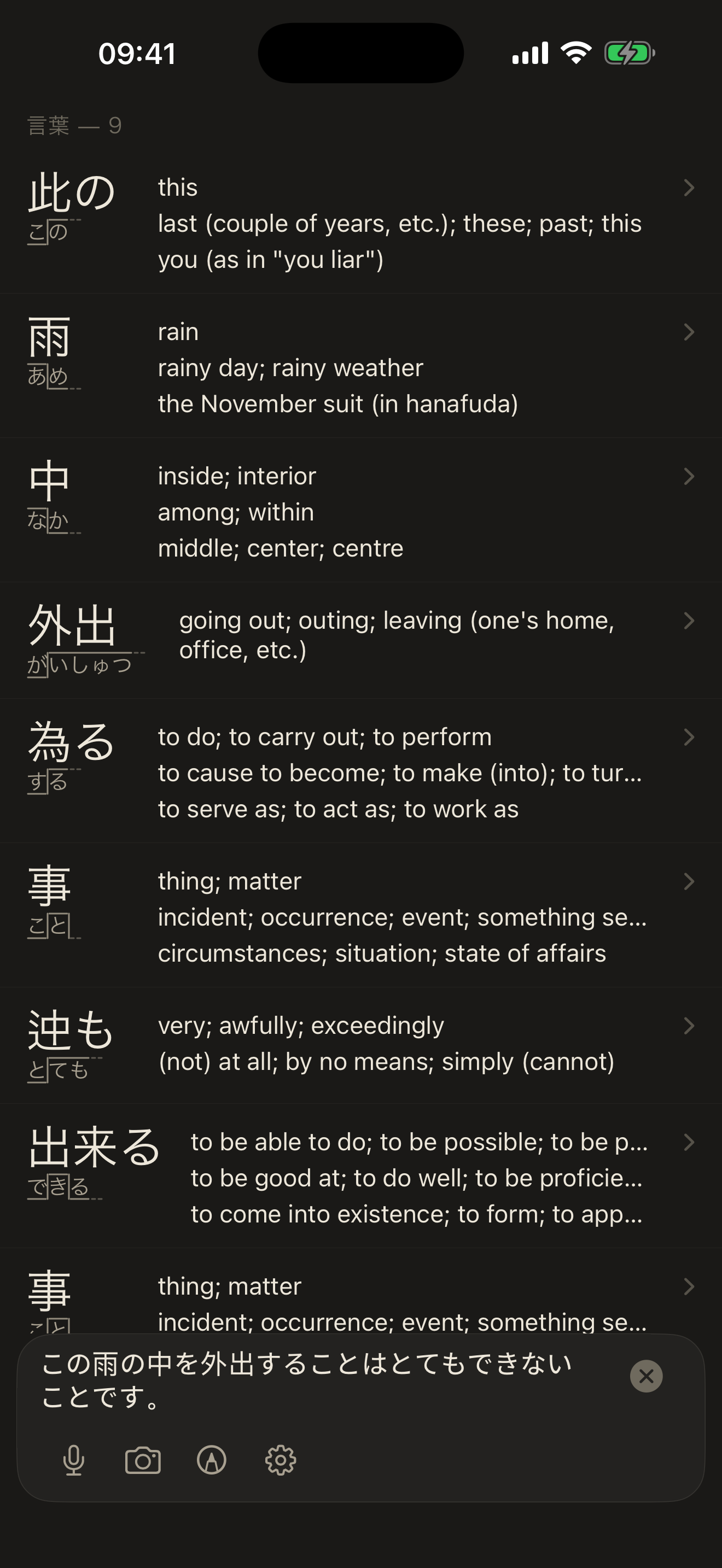
Paste a sentence — the app splits it into words and shows readings and meanings.
Furigana & pitch
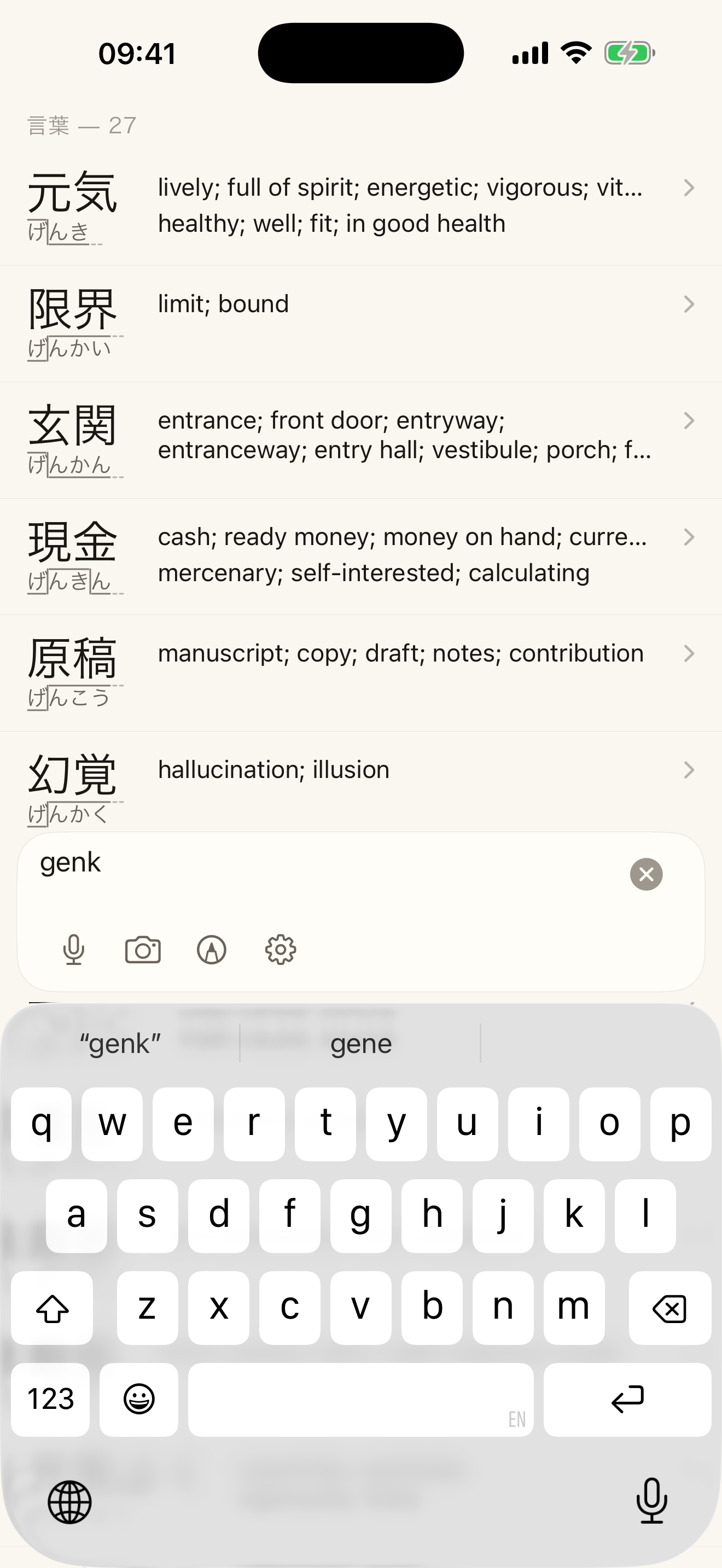
Readings above the kanji and a pitch-accent contour.
Type anything
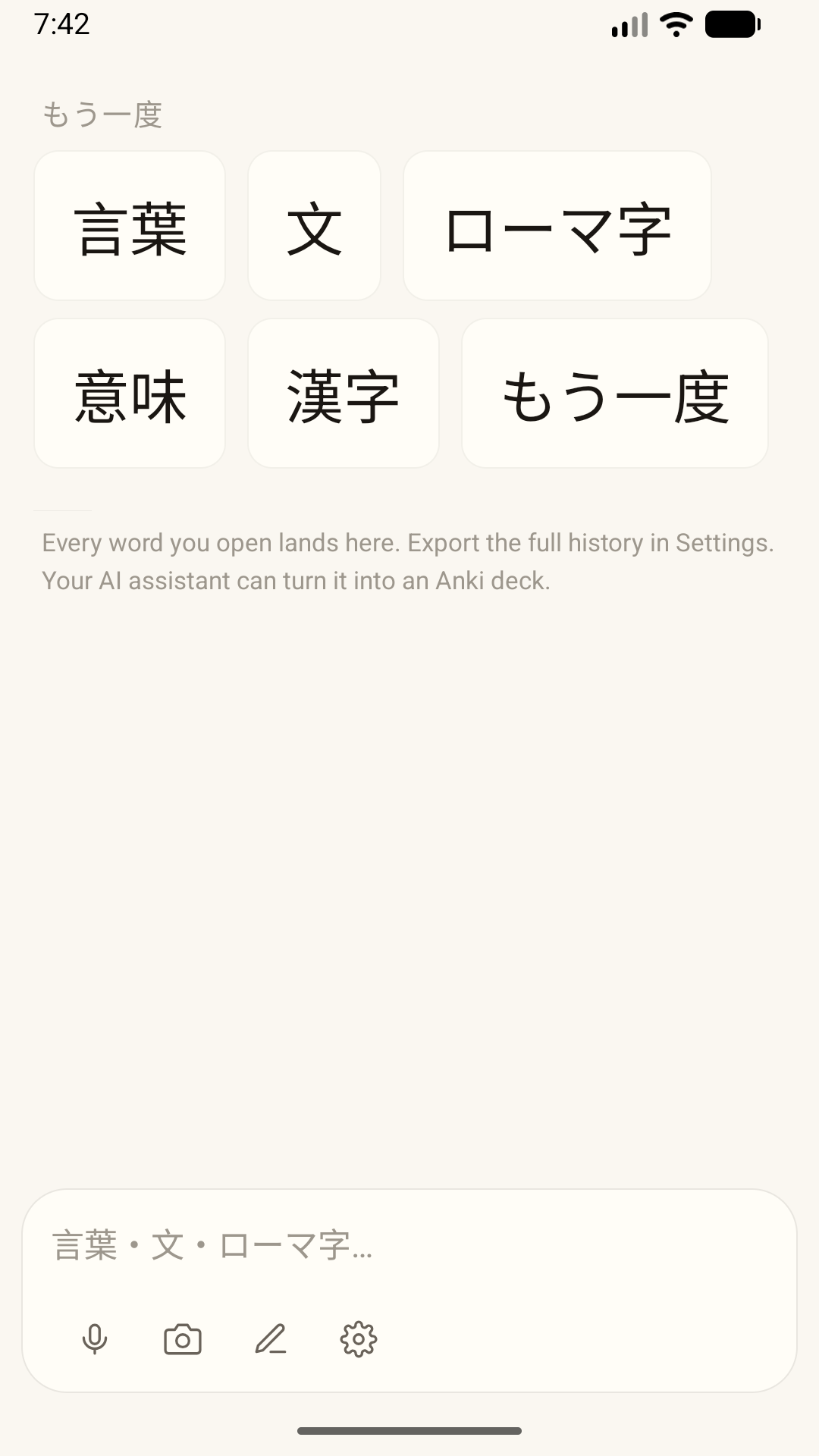
Kanji, kana or romaji. Understands inflections: わからない → 分かる.
Handwriting & camera
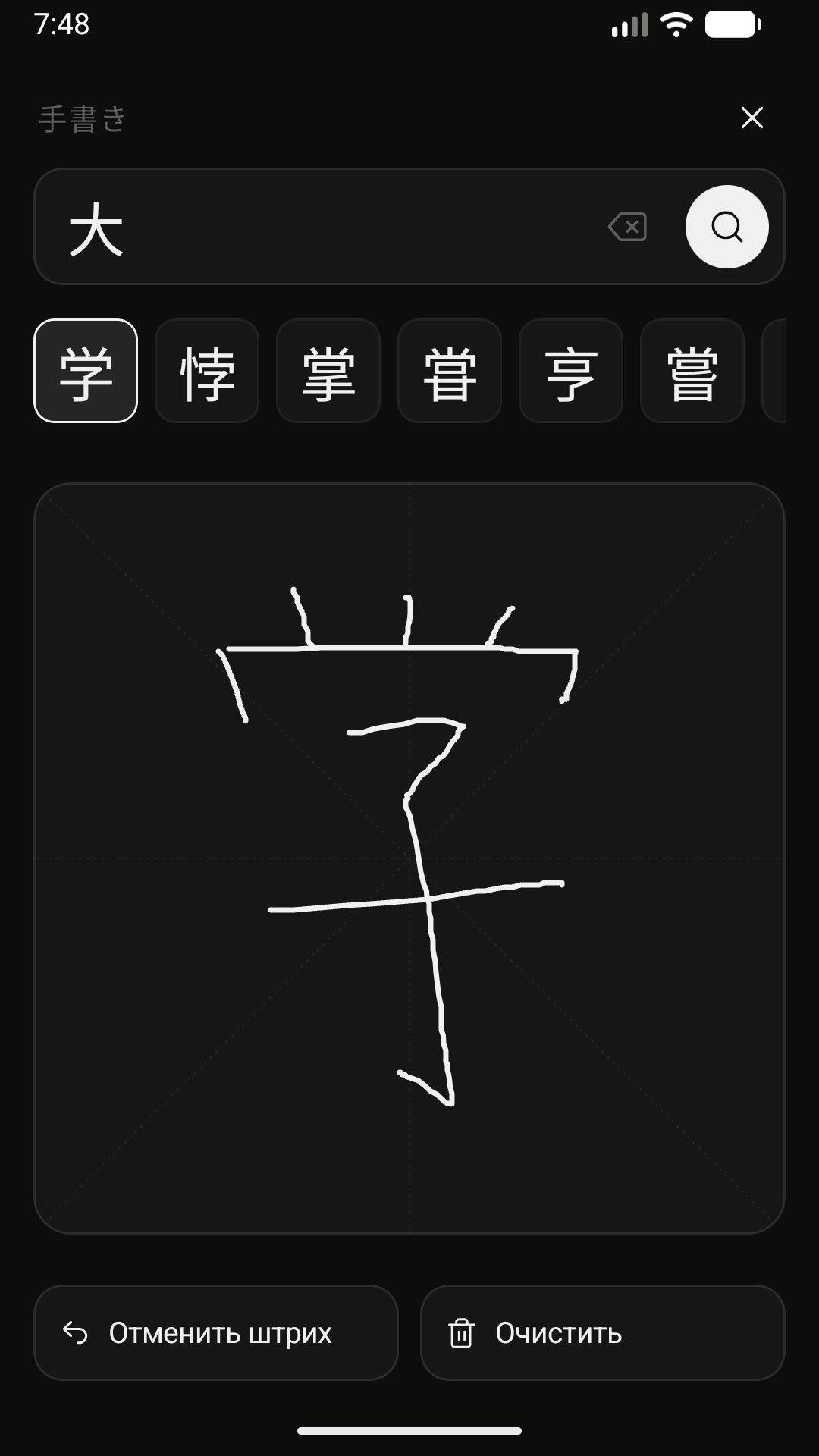
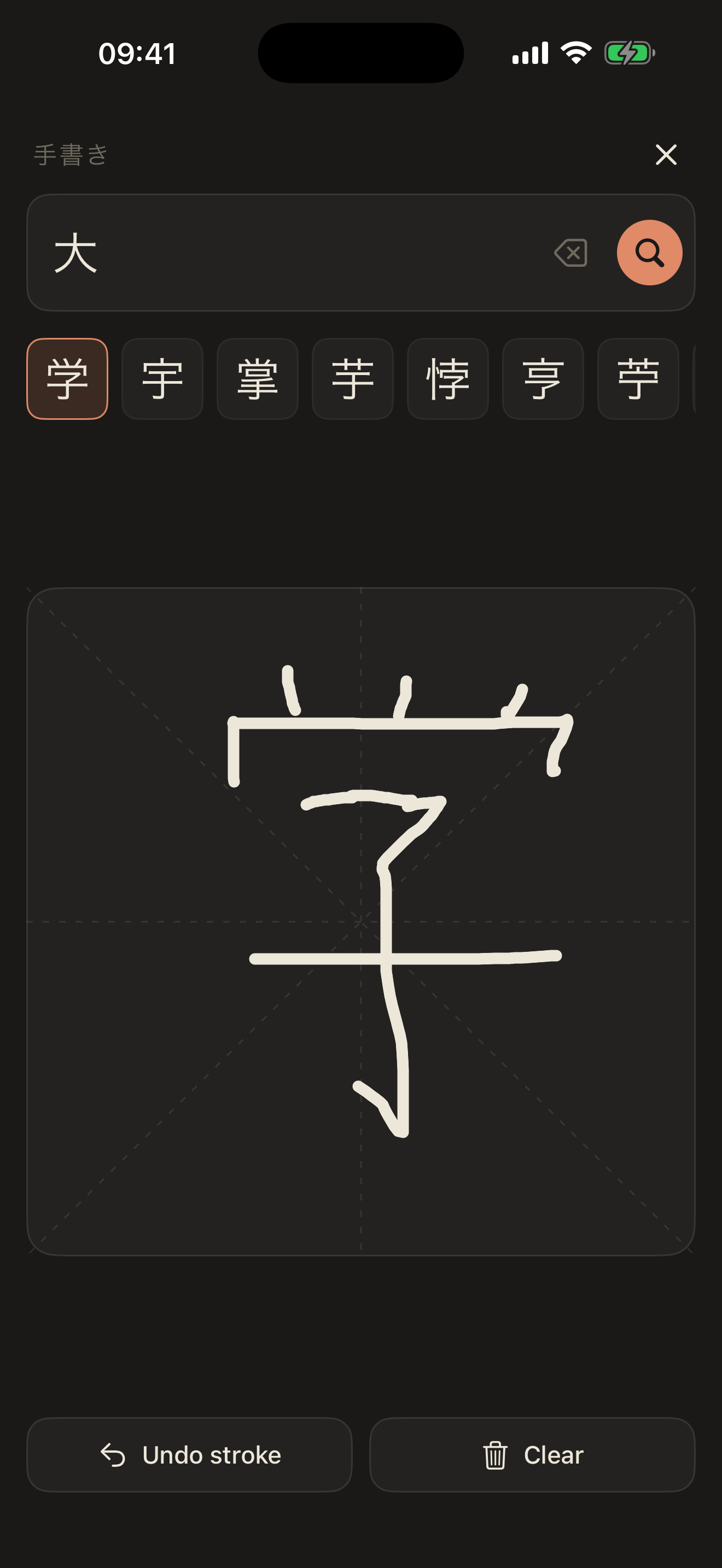
Draw a kanji you don't know, or recognise text from a photo (OCR).
Voice & audio
Voice search and synthesized word pronunciation.
Kanji breakdown
On'yomi and kun'yomi readings, meanings, JLPT and WaniKani levels.
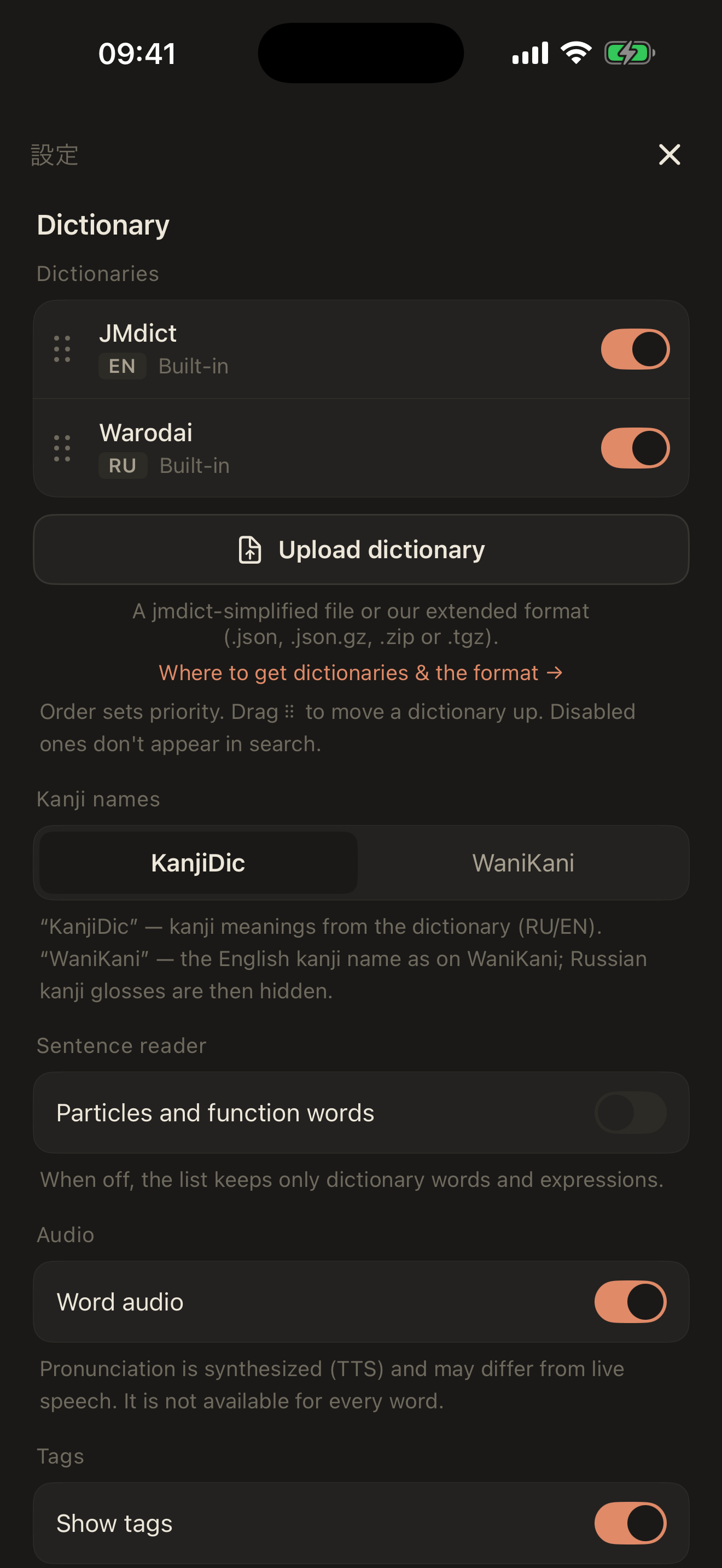
Your own dictionaries
Add several dictionaries and import your own — import format →
History & export
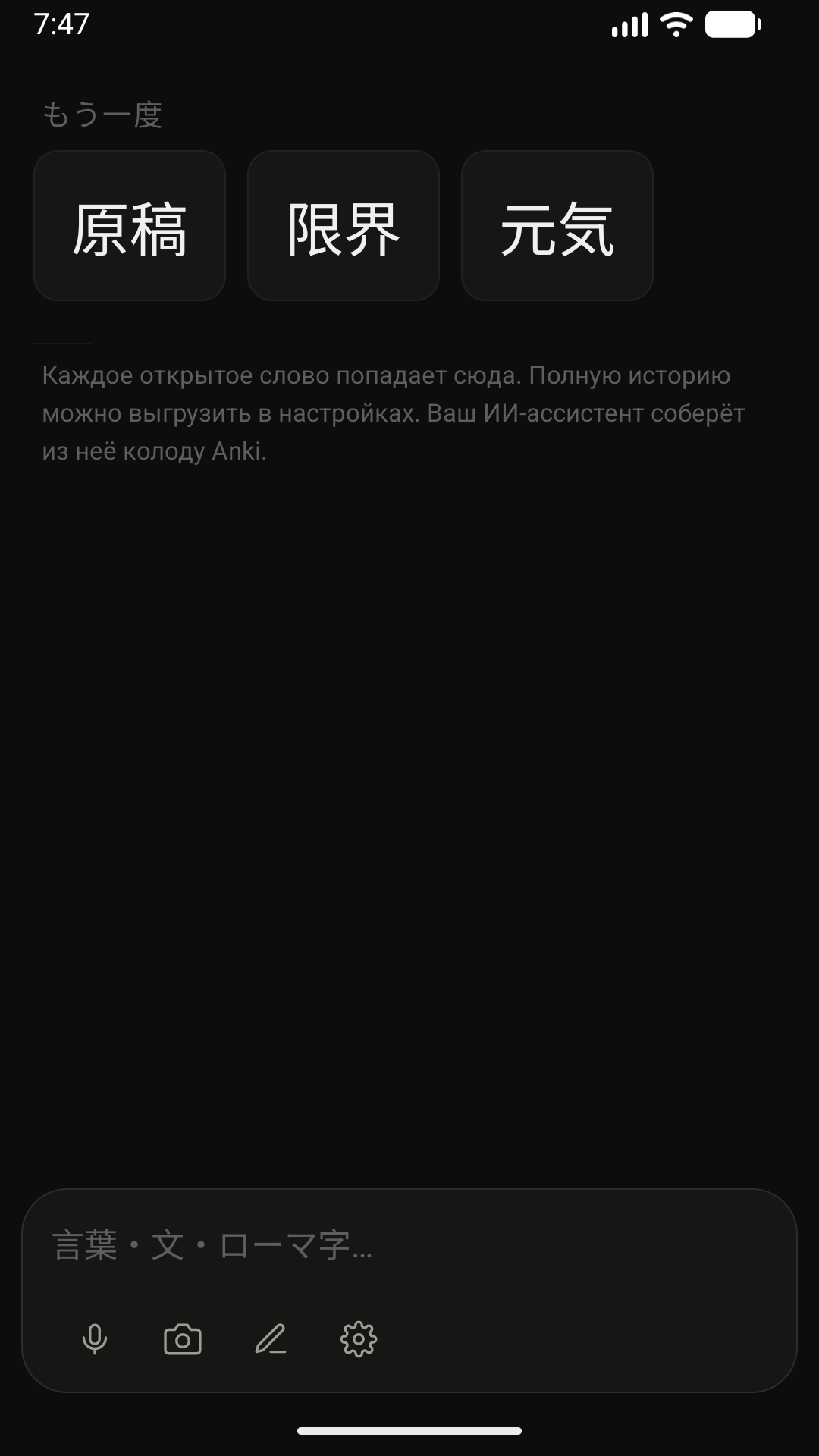
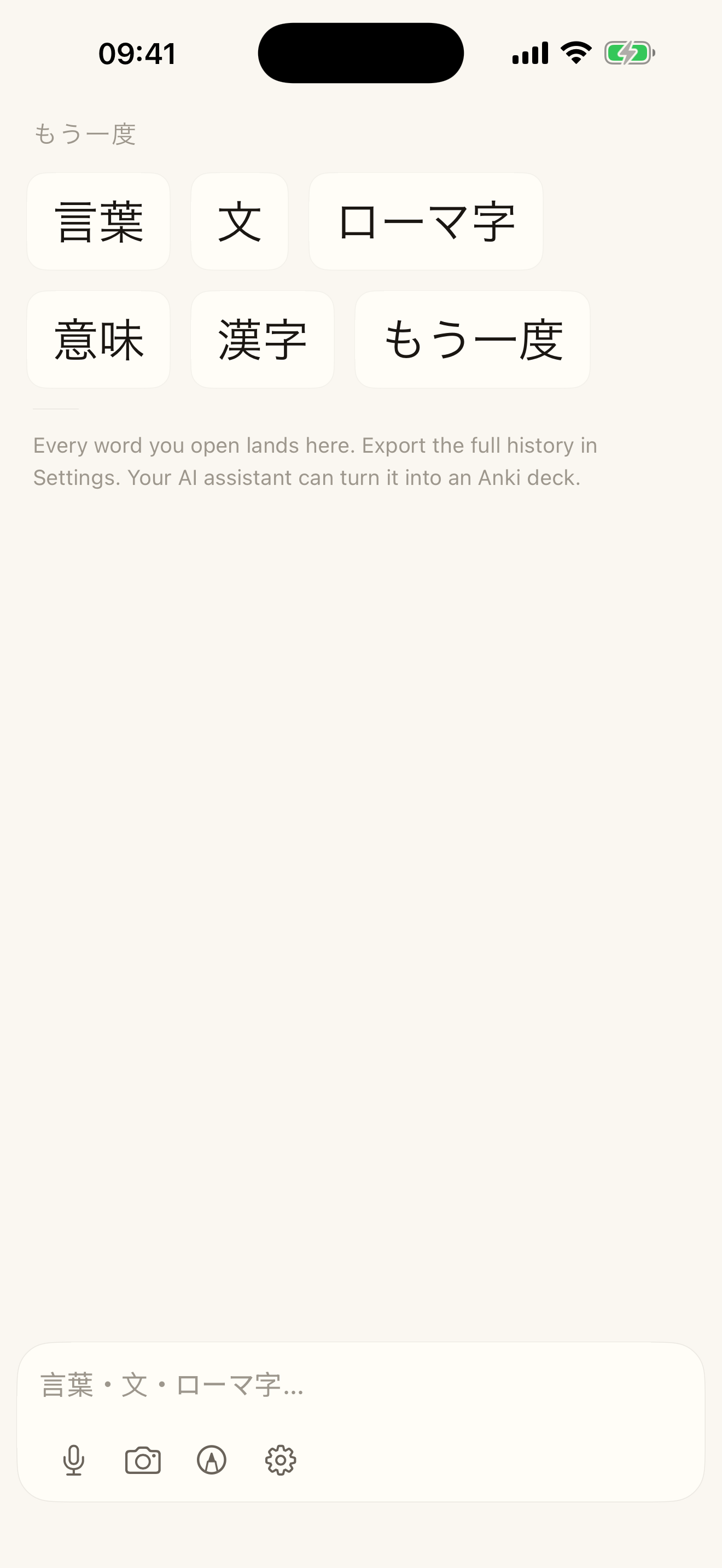
Your lookup history stays on the device; export it to CSV.
Three UI languages
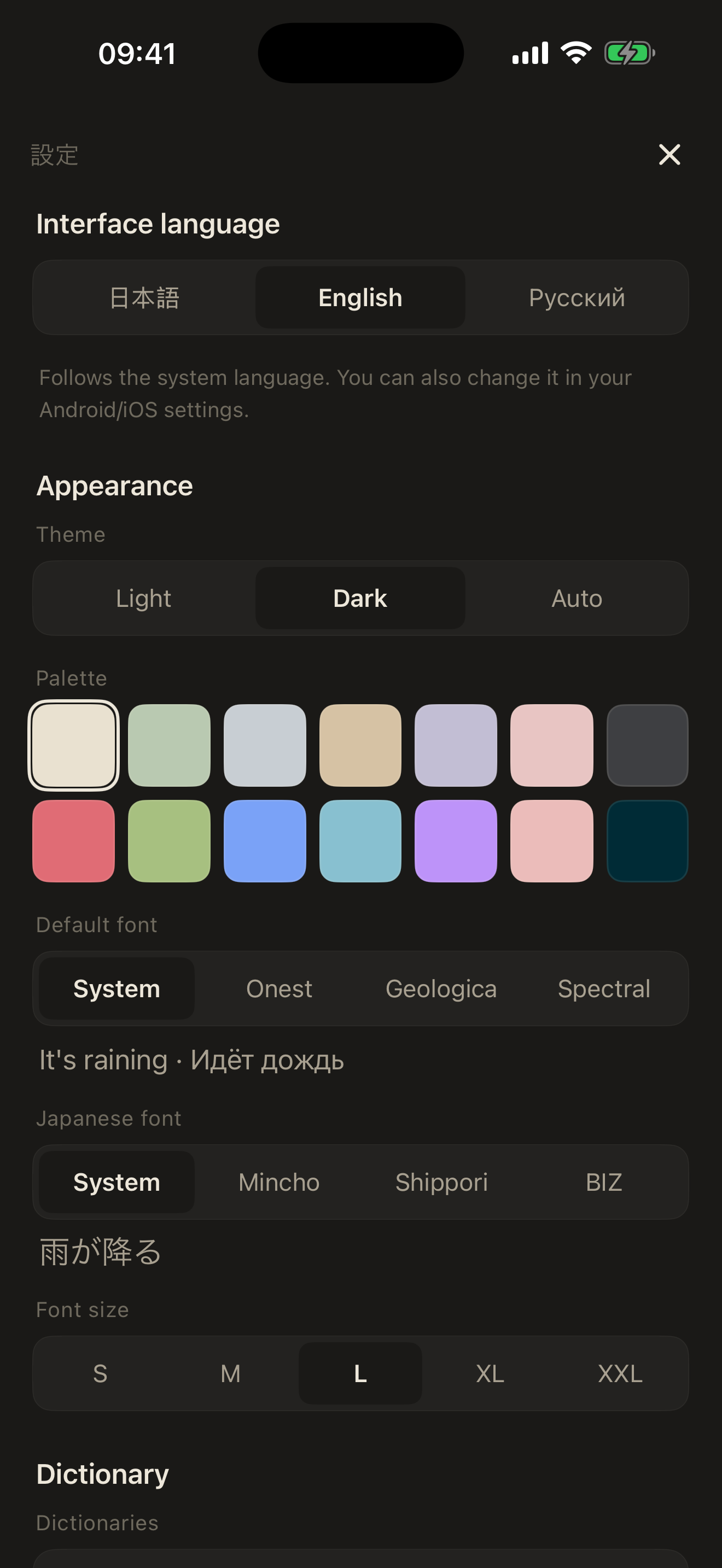
English, Russian and Japanese — follows your system or your choice.
How it looks
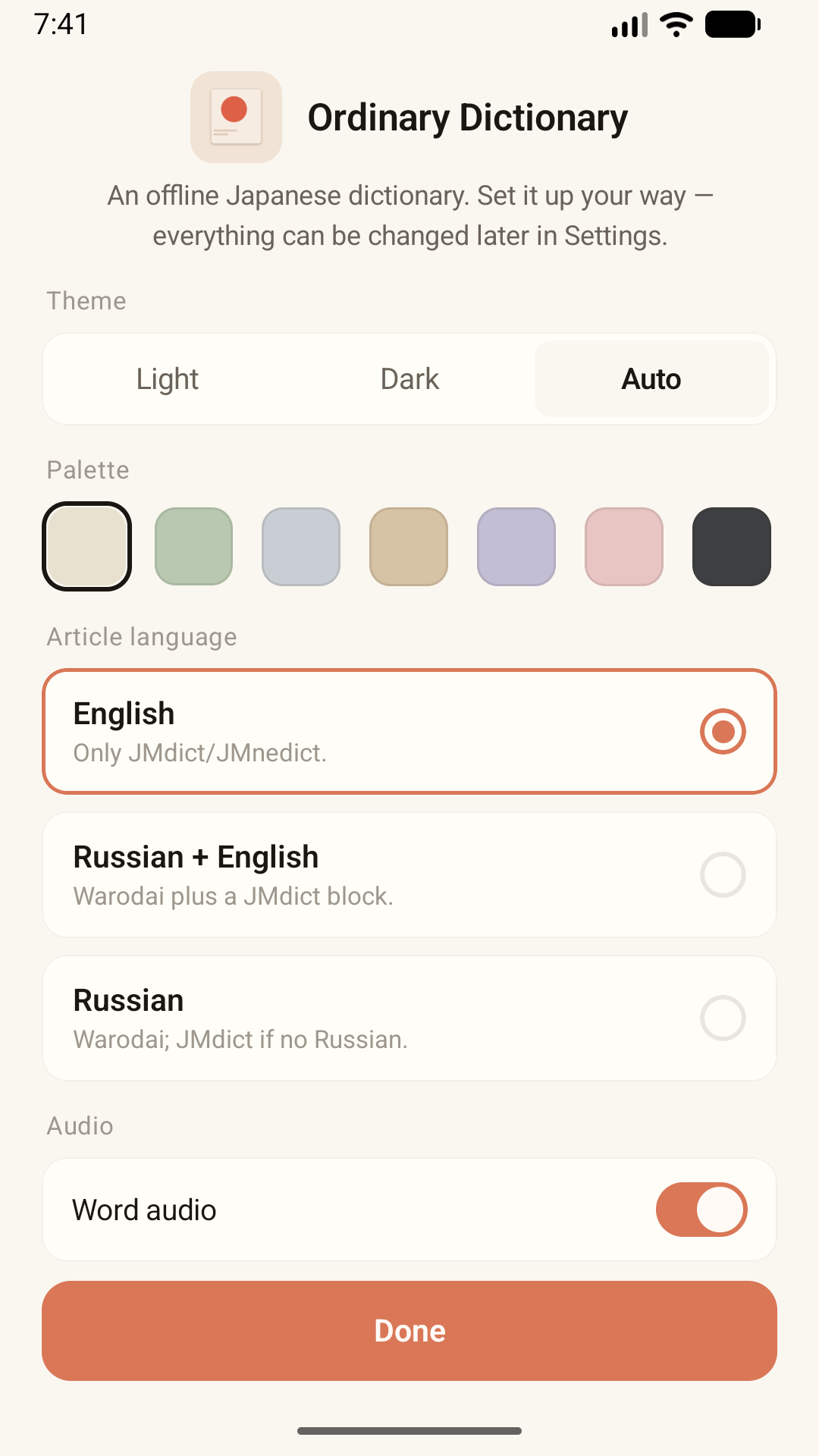
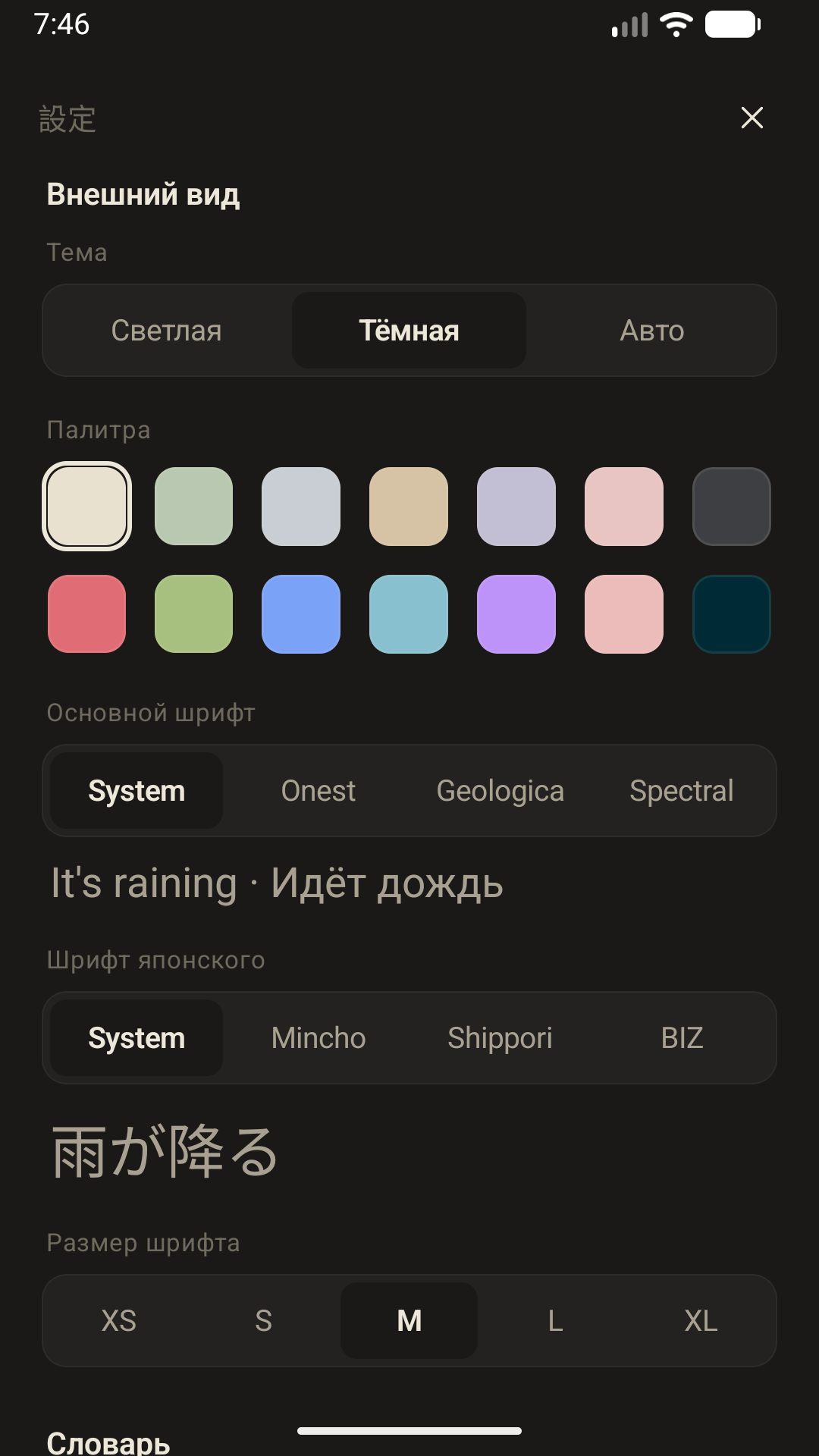
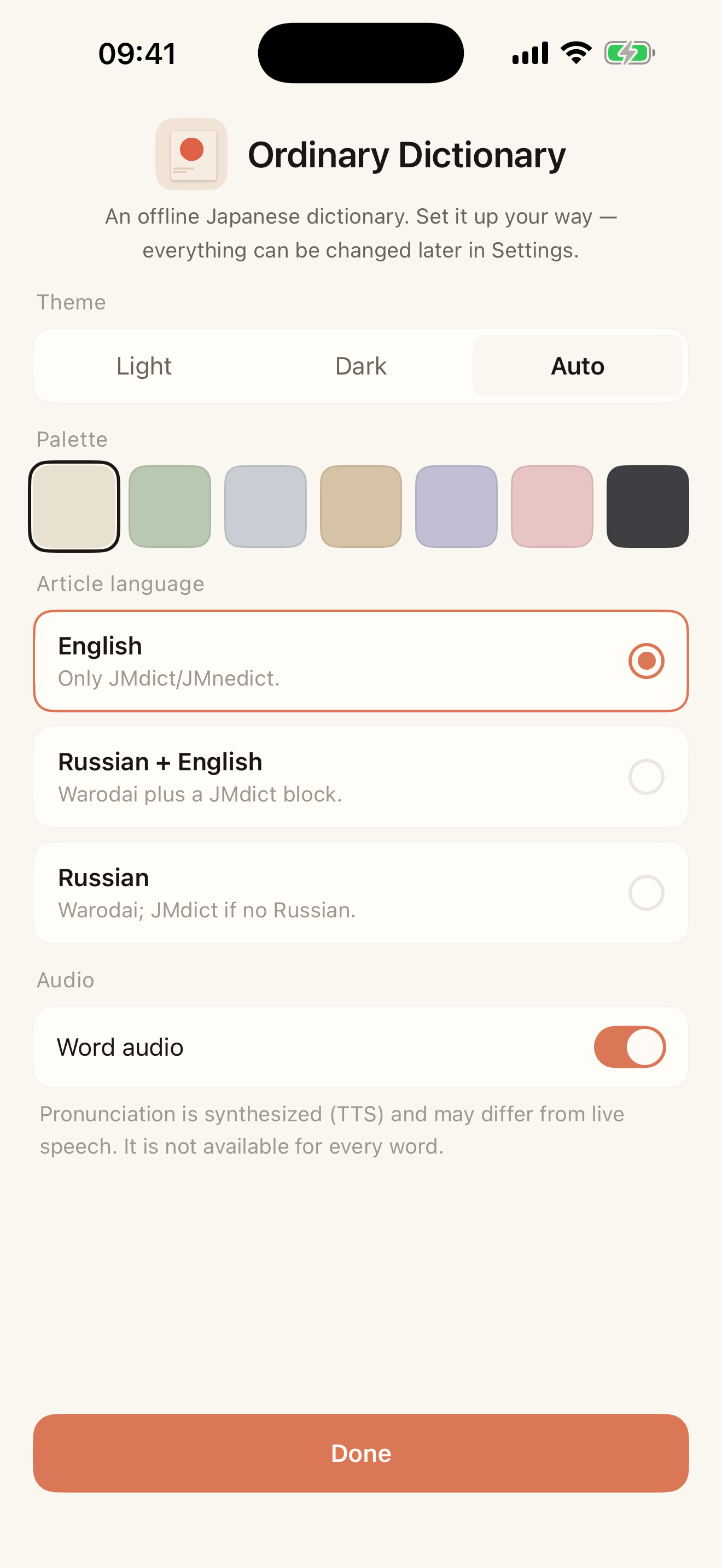
Android and iOS screenshots — light and dark themes.

About the dictionary
There are plenty of electronic Japanese dictionaries.
But on a trip to Japan I kept missing very basic things:
- OCR is often paid, and I was not ready to pay just for OCR;
- dictionaries with Russian are often thin — probably because Warodai's license does not fit paid products well, or simply because the market is small and people rarely think about it;
- many dictionaries try to keep you inside the app, while I wanted quick jumps to WaniKani, which I actively use for kanji;
- I wanted an easy way to export lookup history, so the dictionary would not push its built-in flashcards instead of Anki;
- I wanted more visual settings, at least enough to tune the interface a little;
- many interfaces contain a lot of English and other unrelated labels, which distract from the Japanese.
Dictionaries with unique features and strong content — such as Monokakido or the built-in iOS dictionaries — can be forgiven a lot. But most dictionary apps are built on top of JMdict and mostly differ in the interface around the same data.
So I decided to make something that solved my own problem. I hope it can be useful to someone else too.
Obviously, not everyone in the world needs Russian. So I added custom dictionary import in the app's own format. For mobile dictionaries, this still seems fairly rare.
Custom dictionaries are a superset of jmdict-simplified. That means JMdict dictionaries can be imported as-is, although example sentences there are English-only. I hope the format description and modern LLMs will help people who need this.
Why not use the Yomitan format? Because it is too varied for this app.
Did I make everything exactly the way I wanted? No. I spent a lot of effort on layout and typography, but I am not a designer, and I fear it shows. OCR could also split text into sentences better.
The word counter in the reader is not always transparent to the user, and sometimes it would be better to hide it. Search for English and Russian words sometimes competes with romaji and Polivanov-system search. But to me these are small rough edges: trying to fix them right now may break more than it fixes. At least in the first version.
Data sources
The dictionary is built from open projects, and is updated periodically (roughly twice a year). Thank you to everyone who creates and maintains them.
JMdict, JMnedict and KanjiDic2 are the property of the Electronic Dictionary Research and Development Group and are used under licence.